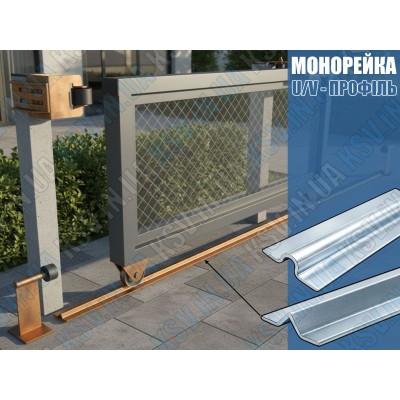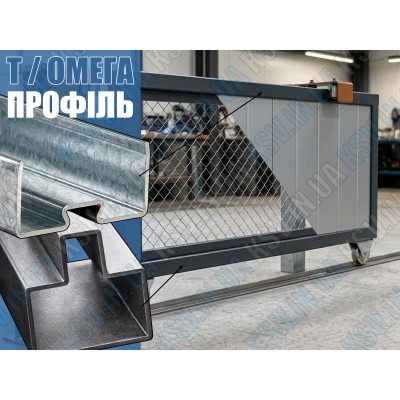

Calculating the Sliding Gate Rollback Zone on a Monorail: How Much Space is Really Needed
When planning the installation of monorail sliding gates, the key question is calculating the "actual construction footprint." Unlike cantilever systems, gates on wheels are more compact but require precise adherence to mounting clearances. The KSV Systems engineers have prepared a simple algorithm to help you avoid mistakes during the design phase.
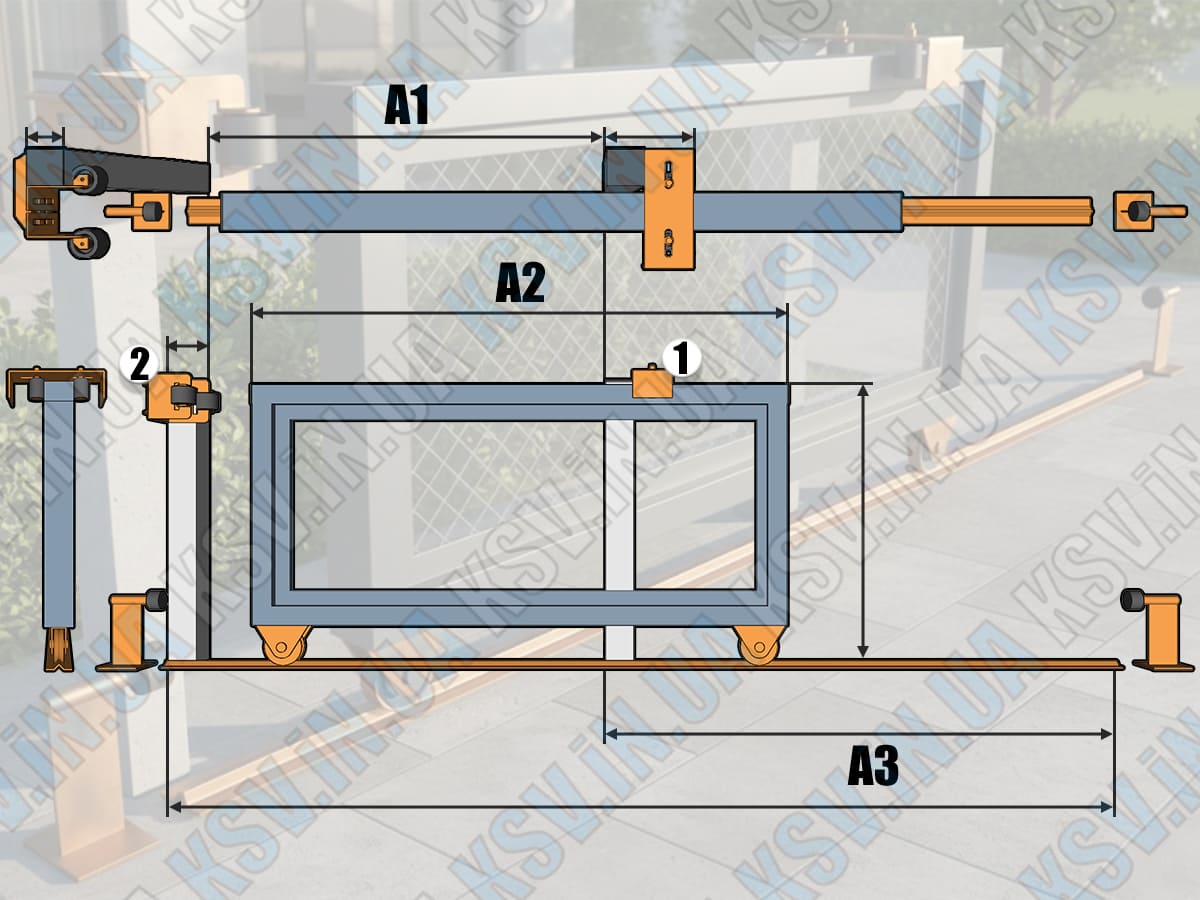
Engineering Calculation Algorithm
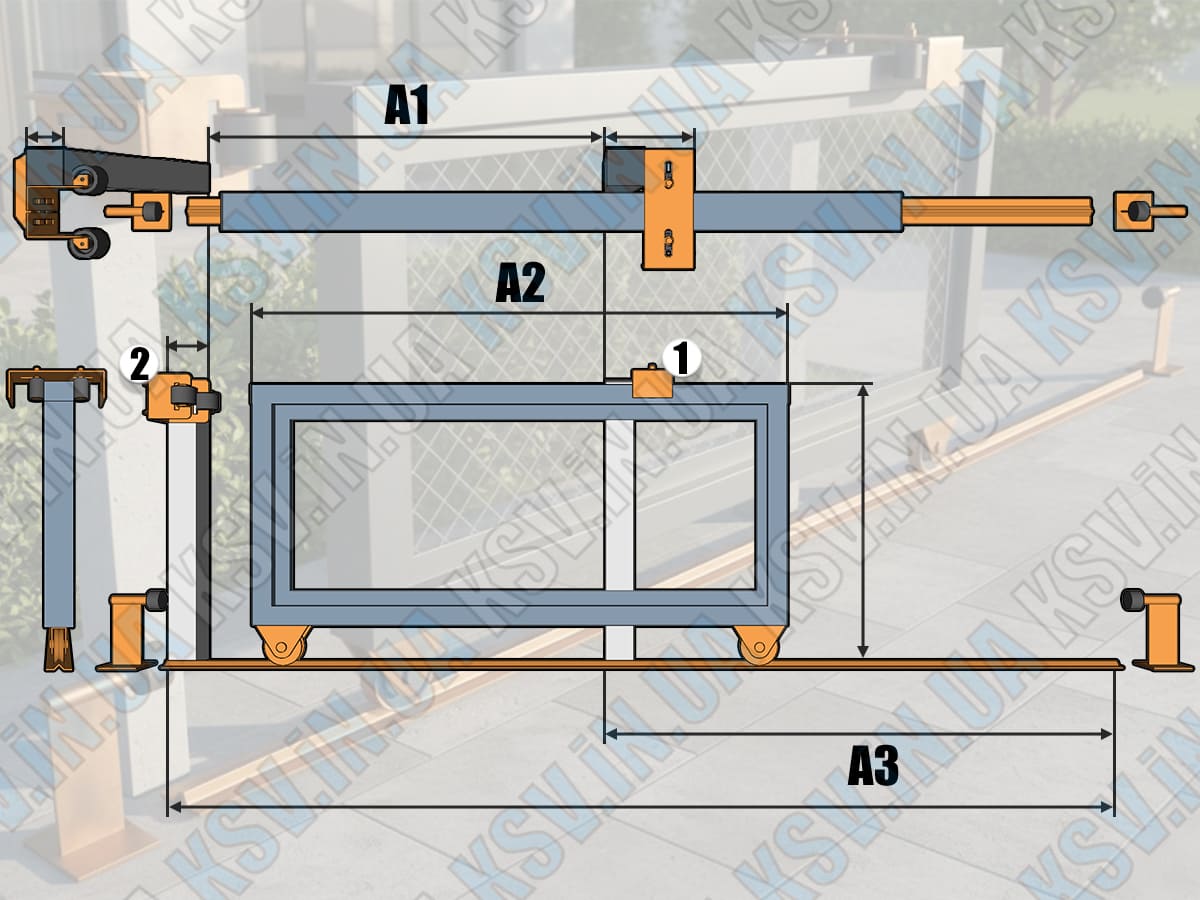
The main feature of monorail gates lies in calculating the A2 (frame length) parameter. To ensure the gate leaf fully covers the opening and is securely fixed in the closed position, we use the following formula:
Formula: A2 = A1 + 10 cm + 20 cm
- A1 (Clear Opening): The width of the space between the posts.
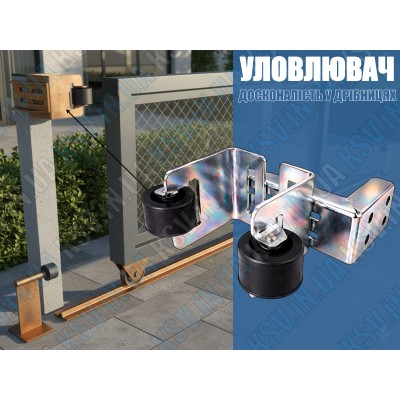
- 10 cm (Catcher overlap): Distance for the gate leaf to lock into the catcher (№2).
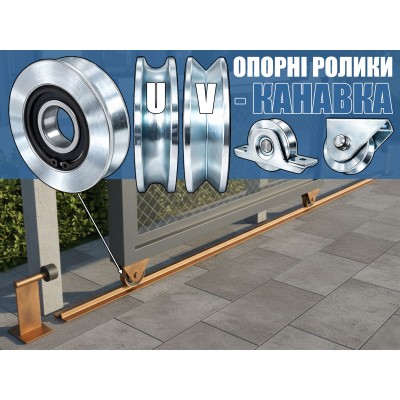
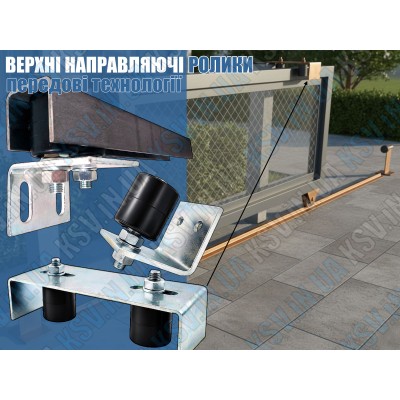
- 20 cm (Technical clearance): Space for mounting the guide rollers (№1).
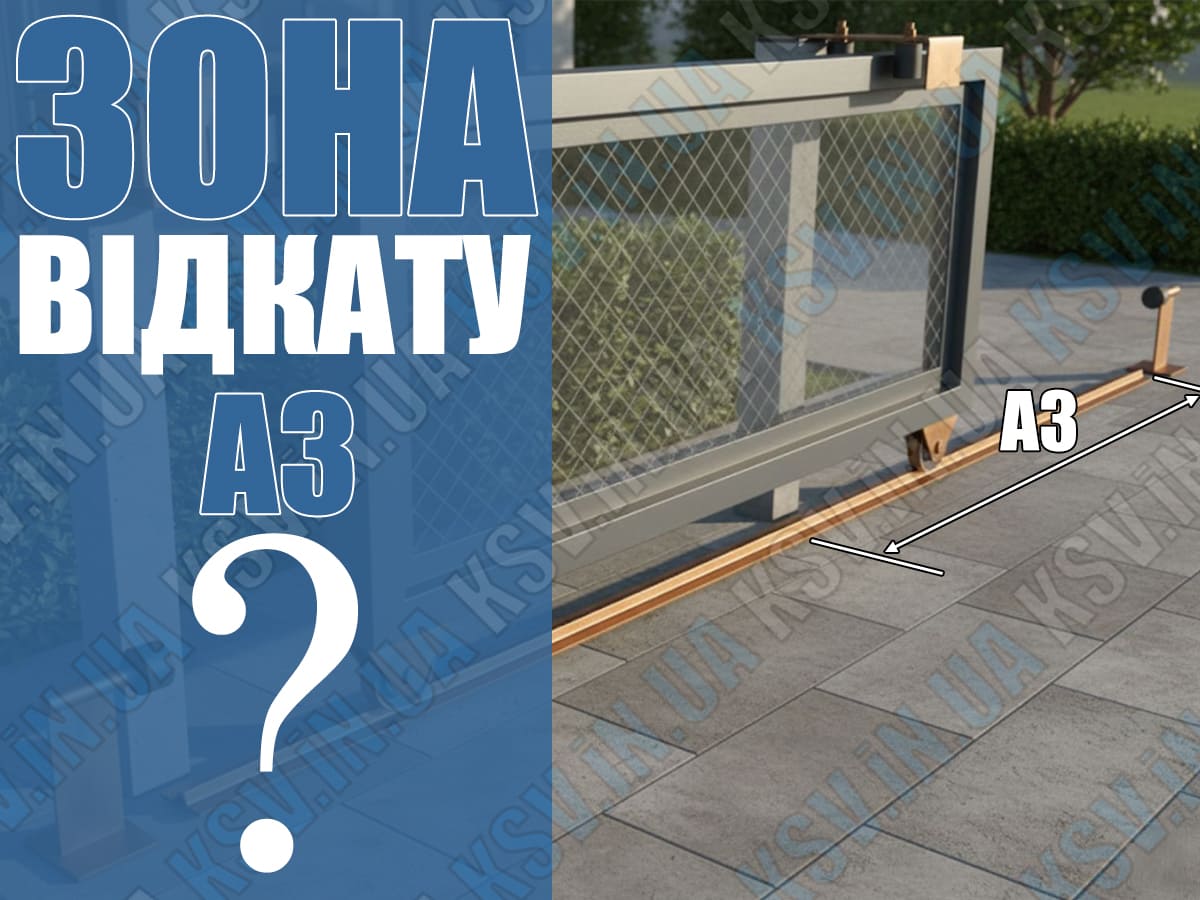
Rollback Zone (A3): For a standard system, it is equal to the total frame length: A3 = A2
What if space is limited?
If the rollback zone A3 is significantly smaller than the entrance width A1 at your site, we have a solution. Telescopic sliding gates are the perfect fit for you.
Key Advantage:
For this system to operate, the A3 parameter (rollback zone) can be twice as small as the entrance width A1. This is achieved by using two or more leaves that move simultaneously.
Telescopic Gate CalculatorAutomation by KSV Systems
Monorail Gate Online Calculator
Simply enter the opening width (A1), and the system will instantly calculate all mounting parameters and select the necessary parts for DIY gate manufacturing.
Ready to calculate?
Get a full specification for your project right now.
⚙️ KSV Systems — professional solutions for your gates.